

Beyond Bottles, Building Bonds
Exploring the shifting habits of perfume enthusiasts and how could niche brands strategically respond to these changes, setting new standards in perfume distribution.

Yesterday, I received a package with the exquisite Equistrius, and yes, this will be a post praising Parfum d'Empire. But I want to talk not about the fragrance itself but about how delighted I am with brands that communicate with their audience the way Parfum d'Empire does.
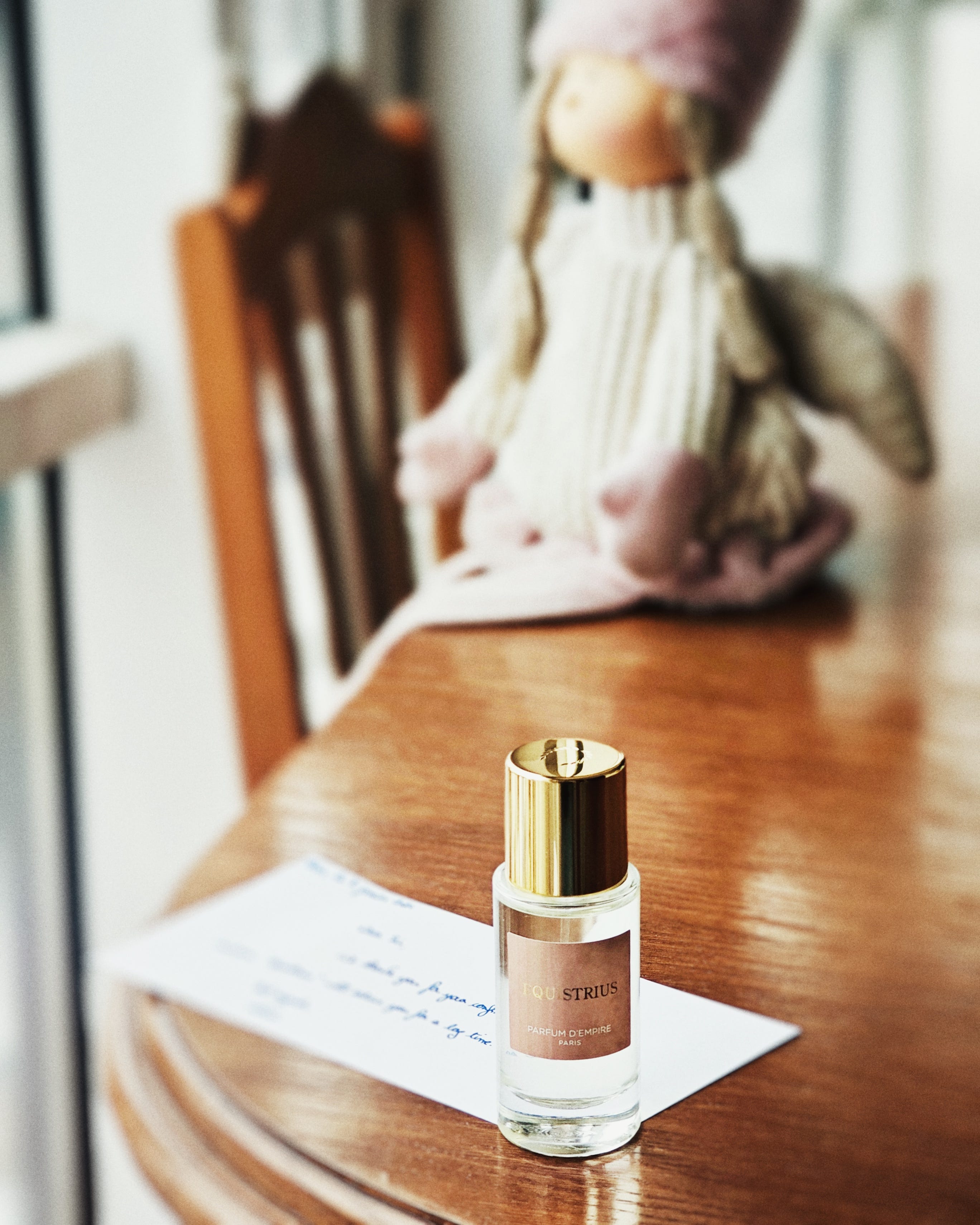
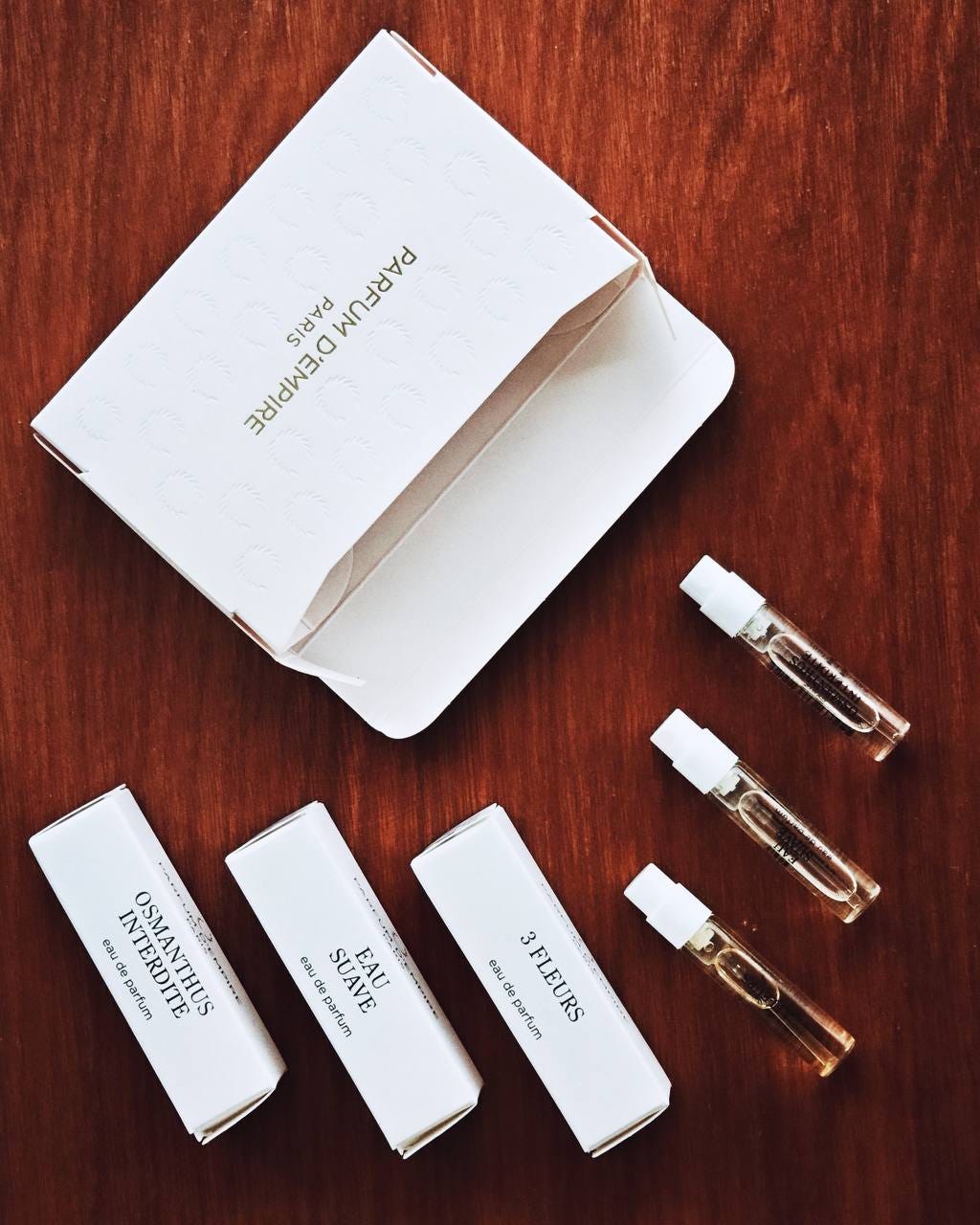
Their discovery set is just perfection. Firstly, it includes all the brand's fragrances, so there's no fear of missing out. Secondly, they offer free worldwide shipping. Thirdly, they provide a 20 euro discount on the purchase of a full-sized bottle. And fourth, they didn’t pay me for these words! (And fifth, of course, and most importantly, Marc-Antoine Corticchiato is an incredible creator, and exploring this set is genuinely interesting for its reminiscences, unusual use of familiar notes, and beautiful rich development of the scents.)
Regarding delivery and distribution more broadly — this is actually my big pain point. I live in Moldova, and most niche brands are simply unaware of the existence of my country (even if they claim to offer international shipping). Yes, perhaps our country is not a massive market, but if there are brands that can deliver here, why can't many others? I'm not the only one complaining about distribution issues; even residents of some European countries have limited access to many brands. Not to mention Southeast Asia and probably many other regions. And, well, yes, if you add up all these small markets together, maybe it will result in a quite decent addition to the business?
Why do I consider this important? Well, let me start from afar.
About 20 years ago, brands like Serge Lutens, L'Artisan Parfumeur, Frédéric Malle, etc., carved out their sweet spot, next to the designer giants' huge gray factories with gloomy smoking chimneys. That's what we now call the niche market. They revolutionized how we perceive perfumery in many ways. For instance, Frédéric Malle aimed to turn perfumers into rock stars, and he succeeded: now we eagerly await new releases from specific perfumers, know them by face, and read interviews with them. Serge Lutens undoubtedly had a significant impact on the aesthetics of perfumery — scents should tell stories, and the accompanying attributes should support these stories. And so on.
Under the pressure of "niche" brands, designer brands, bored on their laurels, came up with exclusive lines, invited master perfumers, and introduced non-standard creative scents.
Now, niche brands of the 2000s have fallen into the hands of cosmetic and fragrance giants. However, this has ultimately been a mutually enriching process: the niche gained financial stability, and the designer brands gained invaluable creative perspectives. For example, yesterday I enthusiastically read the news that Frédéric Malle is overseeing the reassembly of legendary Estee Lauder fragrances — Knowing, Azurée, Private Collection...
Of course, this blooming meadow will never be empty again. New players rush in year after year.
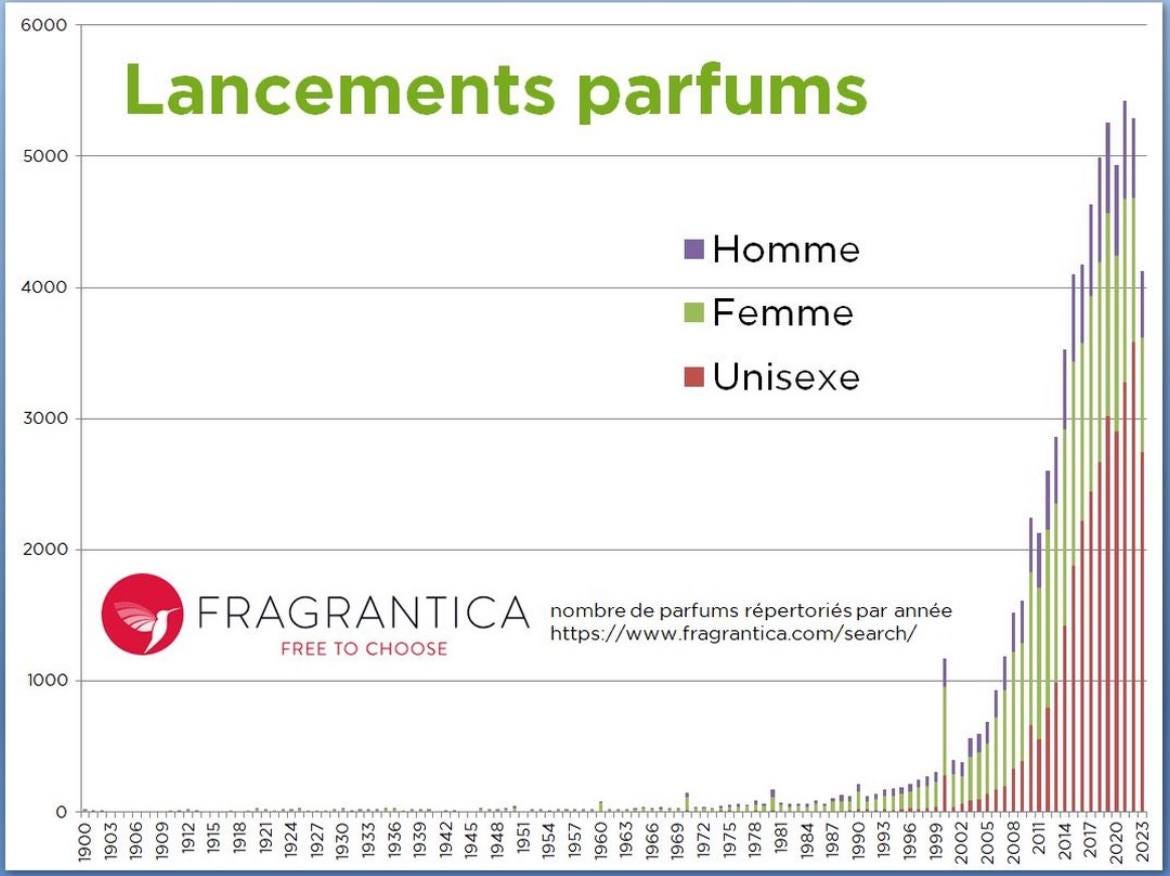
But 20 years ago, fewer than 500 perfumes were released per year, now that number is around 4500.
With such competition, even the most seasoned perfume enthusiast finds it challenging to navigate. And if before, we used to run stumbling into a store for the latest release, now we patiently wait for it to come our way.
No one is saying that quality should be compromised.
But the most significant differentiator these days is not only producing a conceptually and creatively interesting perfume but also successfully getting it to the consumer's nose.
There's a top-tier distribution problem for perfumes. The brand or brands that come up with an effective solution may hit the jackpot.
How to do it? Well, if I knew, I would have already worked for one of those brands, hit the jackpot and wouldn't be writing this article here :) But, of course, I have some thoughts.
First, sampling services. Seriously, the pandemic has significantly changed habits. If, in the past, we (perfume enthusiasts) used to visit fragrance stores quite often, now we increasingly order sample sets, or even, forgive me, decants.
These little vials are, in fact, the engines of olfactory education.
With their help, we can relatively inexpensively test different scent profiles in various conditions. We can compare similar scents on ourselves, observe the differences in perfumers’ signatures, and trace the history of perfume trends... This need for decants is already embraced by many major perfume stores having their own sample services because there is a real demand for it.
Second, worldwide delivery. Yes, it's a very demanding thing because there are customs restrictions, limitations on hazardous liquids, and so on. But there are already people successfully solving this problem. It needs to be scaled.
Third, investing in relationships and using 21st-century methods to build these relationships.. I'll conclude with an example from Parfum d'Empire as well.
Currently, in my shopping cart on their website, there are Le Cri and Ambre Russe. Can you guess which two samples they included in my package?
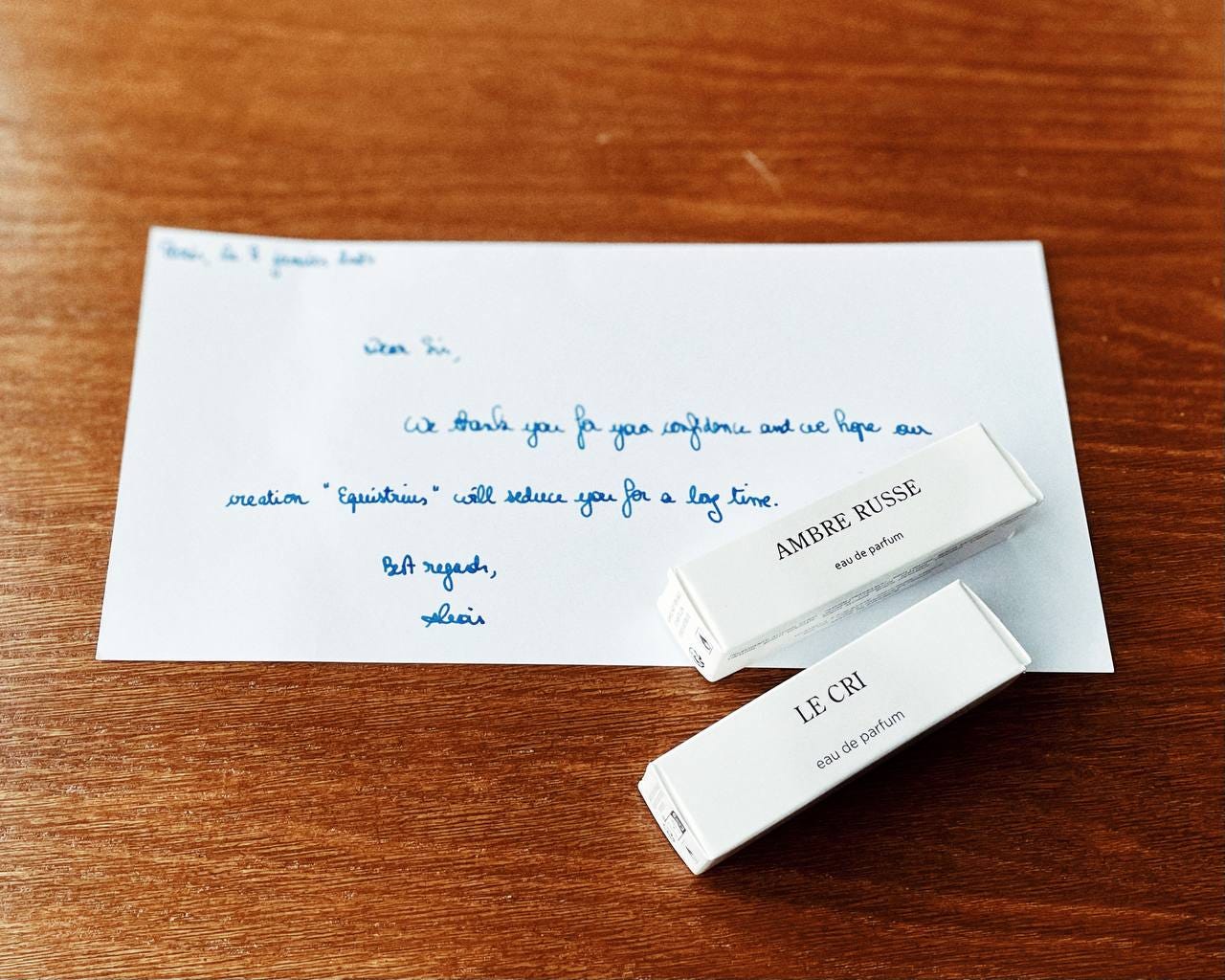
Le Cri is magical