
Equipment
One word for two plants, a bug spray, a love potion, and an evening

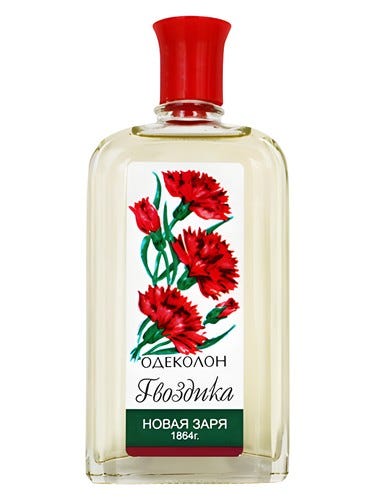
The mosquitoes came up out of the grass at around nine, and that was the signal for somebody — grandmother, aunt, a neighbor, whoever was nearest — to take your wrist, uncap the bottle with her thumb, and slap cold cologne up the inside of your arm to the elbow. It went on freezing and was gone almost at once, the way alcohol is, leaving a tightness on the skin and a smell that hung around you the rest of the evening like a rumor. It stung in the places you’d already scratched raw. Nobody asked whether you wanted it. You held still, you got doused, and then you were allowed back out into the dark where the biting was.
The bottle said Gvozdika — one Russian word for two different plants, the spice and the flower, though nobody splashing it on was thinking about either. It cost something like thirty kopecks, it stood in every dacha kitchen and every glove compartment in the country, and not one person handling it would have called it perfume. It was equipment, in the same drawer as the iodine and the mosquito coil and the green stuff you painted on scrapes. What it ran on was eugenol — the molecule that makes up most of clove, most of carnation, and a fair part of the smell of a dentist’s chair. The clove tree grows it on purpose, to be left alone: a poison packed into the buds to put off whatever would eat them, and it puts off insects too, which is the whole and only reason it ever ended up on the arms of children at dusk. The plant’s entire chemical sentence, if you let it finish, is some version of go away. And somewhere along the way the same sentence started getting read aloud as come closer.
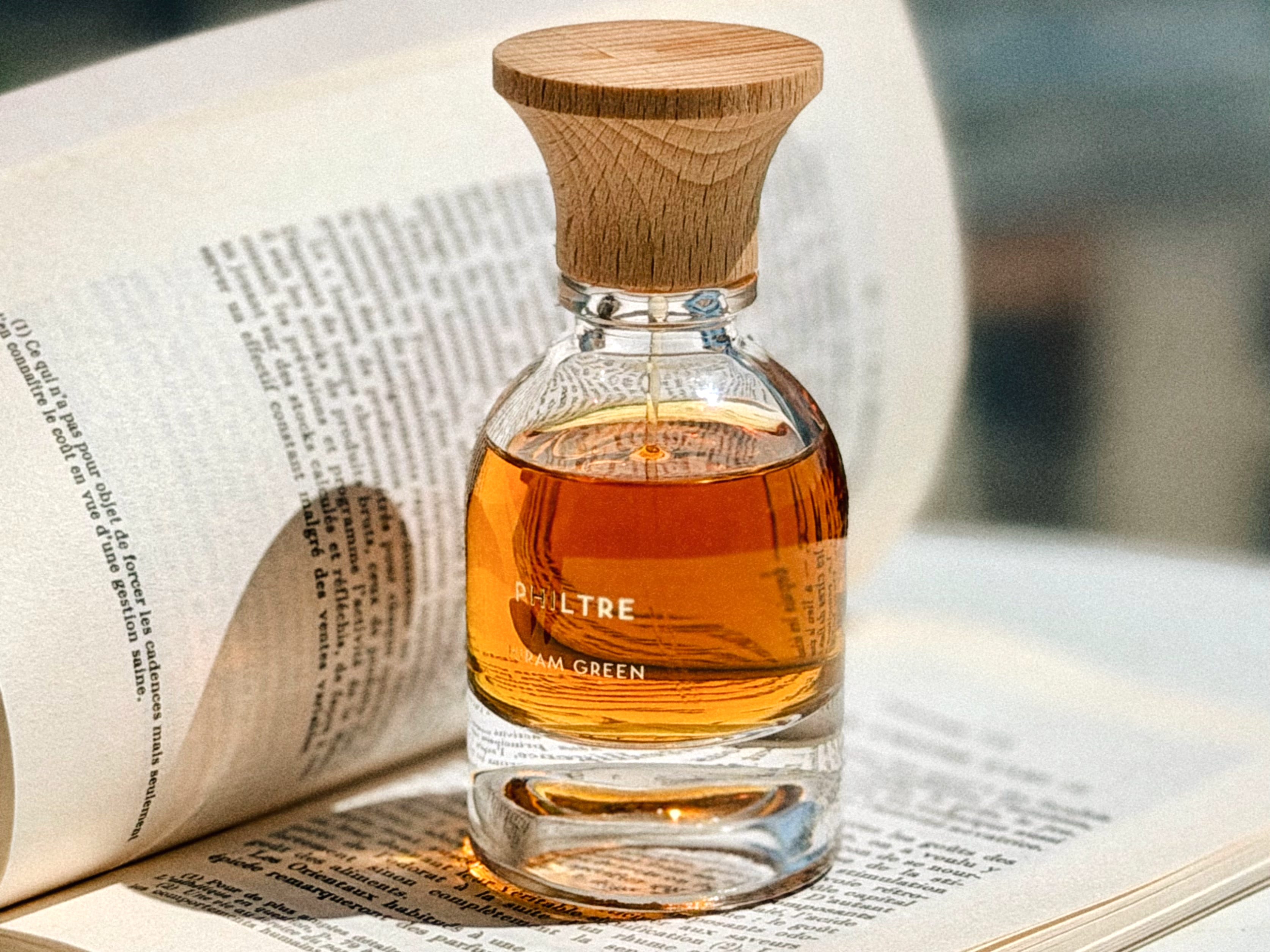
One of the best of those readings is Hiram Green’s Philtre. To my nose it’s one of the great things of the last ten years — a perfect launch, full stop, I’m not going to be coy about it. And it’s sold to me as a love potion: Tristan and Isolde on the website, carnation introduced as “the flower of love,” a straight-faced instruction to use it carefully. Hiram Green didn’t invent that move; he’s only the newest name on a long list. L’Heure Bleue is carnation under the blue hour; Opium was half built on the stuff; Caron made Poivre and Bellodgia out of it, there’s L’Air du Temps, there’s Lutens’s Vitriol d’Œillet for when you want it furious instead of fond, and there’s Heaven Can Wait — Ellena, for Malle, three hundred euros, a “romantic invitation” — which is, when you get down to it, clove. Half of them have been reformulated into ghosts of themselves by now, or shut up in bell jars, because the molecule turned out to be an allergen and the rules came for it. The flower of love, the funeral flower, the thing the dentist rubs on your gum: one molecule, sold to you as whichever of the three you walked in wanting.
The one that lived on me longest is 1969. It was one of the first niche bottles I ever loved, and I bought it for the peach and the chocolate folded in under everything — that’s honestly all I’ve ever found in it. My husband leans toward my neck and gets a different bottle entirely. “That’s the army bug spray from the base,” he says — the rest-base he used to go to, the stuff they handed out at the door, a whole riverside summer of it coming up off my collarbone. He’s standing somewhere he hasn’t been in years; I’m wearing something I saved up for. And the clove that drags him back there is the part of the bottle I’ve come to need.
In a Substack chat recently someone mentioned they’d asked a gardener which carnation smelled truest — expecting a variety or a house, I assume — and the gardener sent them to the thirty-kopeck cologne, the bug stuff. A man who spends his days with the actual flower, who has its real smell under his nails, pointing them past every bottle with a love story on it and toward the drugstore tin.
So I went to read what other people get out of it, and I could not believe it: they hear notes. They sit down in front of the thing and take it to pieces — carnation, clove, a bit of pepper, rose, a green stem — and lay the parts out in a row. It was unhinged to read. Like walking in on someone doing a serious tasting of mouthwash: swirl, frown, reach for the word. The Russian-language pages don’t have a single note on them. They’ve got the lake at a workers’ rest-home, an open-air cinema with the reel slipping, a particular August, a specific evening the person is plainly still sitting inside. Mine are the same. I went looking for the notes in myself and there was no room — the whole space was already taken up with dusk and cut grass and a stranger’s hand closing on my wrist.
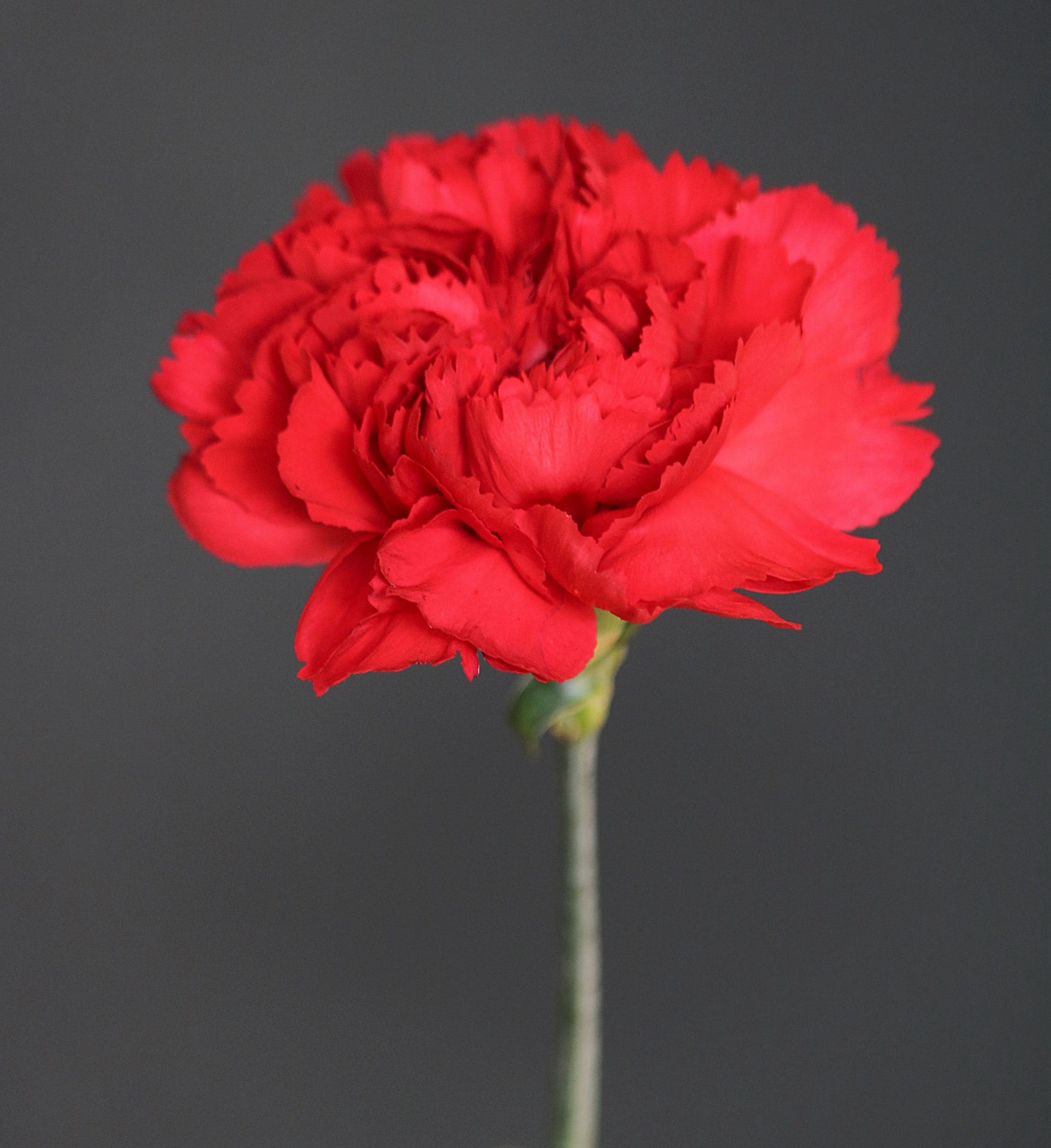
But the notes they’re so busy naming aren’t the flower either. A carnation — the kind in the bucket at the petrol station — mostly doesn’t smell. They bred the scent out of it decades ago, swapped it for stems that travel well and stand up in a vase for a week; the flower you can actually buy is, more or less, mute. The ones with no smell at all are the ones men used to put in their lapels. So whatever those reviewers are pulling apart, it isn’t a Dianthus. What they call carnation is eugenol, which is clove, which in the bottle is nearly always synthetic — the flower itself contributes about nothing. A whole tasting table, frowning seriously over a smell with no flower behind it.
Which the language half-owns up to. Clove got the name first — caryophyllus, the carnation tree, the spice — and the flower borrowed it later, on the grounds of smelling roughly the same; eugenol is named after clove’s old genus, for God’s sake. English then pried the two back apart, clove and carnation, two words for something the nose has never once managed to separate. Russian didn’t bother: gvozdika is both, spice and flower, one word telling the truth. The cologne on my arm was a flower that was mostly a spice that was mostly a molecule, and nobody anywhere in that chain was lying. They just kept passing the name down the line.
As for why the whole thing reads like something your great-aunt kept on her dresser — that was settled before any chemist touched it. Carnation didn’t get banned out of perfume; it got retired, the same decade the boutonnière did. There was a long stretch — Belle Époque to the 1950s — when a man fixed a fresh carnation in his buttonhole the way he strapped on his watch; Cary Grant did it, Gable did it, and it meant you were dressed. Then the sixties came, men quit wearing flowers, the everyday suit went with them, and the carnation lost the one place it had a job. After that it slid fast — off the dandy’s lapel into the bucket at the petrol station, from the prized garden clove-pink to the wreath on a grave. It didn’t help that the flower meant too much, and most of it dated: Wilde’s green one a coded confession, the red one a revolutionary badge, the white one plain conservative respectability. A bloom carrying that much eventually just reads as a while ago. Meanwhile perfume turned green, then turned clean, and anything warm and spicy and powdery started reading as a dowager. Eugenol got restricted decades after all this and bolted the door, but the flower was already gone. It’s a formal smell, and we stopped being formal. That’s most of it.
So I own one of the best perfumes of the decade, and I own a bottle of bug repellent, and it’s the same bottle. Whether I love how it smells or only love what it keeps opening — the grass, the dark, somebody’s hand on my wrist — I’ve decided not to check. You check by taking the thing apart, and there is nothing in there to take apart. There’s an evening.
I put it on and go out into the evening. To the mosquitoes, apparently, I’m still saying no.
I too love carnation perfumes, including vintage Bellodgia and the discontinued Prada Oeillet. I also have a flower garden where I grow many kinds of dianthus (the small kind) and they all smell gorgeous, much like the Prada Oeillet. So while I enjoyed this article, I have to challenge the idea that the carnation has no scent and that “carnation” in perfumes is only clove and is not an accord evoking the flower. The clove is certainly an important element and its restriction will have a deleterious effect on carnation perfumes, but it is only one of several elements that make up the carnation scent in perfumes.
I left a comment on IG before reading this, but now I feel compelled to leave a comment here as well. Philtre is the only carnation perfume that doesn’t only smell of eugenol to me but of the actual flower. And the actual flower undeniably has a scent to my nose. I don’t know if the carnations that we have here are different, but I doubt it.
I couldn’t understand how this perfume actually smelled of carnation. And then I got my answer. Hiram Green did an interview with Persolaise. He talked about using carnation absolute from IFF in this perfume. It wasn’t only me who thought such a thing didn’t exist. Persolaise thought it as well.
IFF only sell about two kilos a year of this stuff according to Hiram and he bought a kilo. It’s rare but it exists and that why I suspect Philtre is not just a bug spray like Гвоздика. I had infusion d’oeillet by Prada. I got rid of it. Philtre is also the love potion made from the actual flower. That’s why it’s different.
You can watch the interview on YouTube. It’s about 40 minutes in.