

Scented Statements
How perfumes complement and enhance fashion

For me, perfume is amongst all other things a reflection of fashion and artistry, capturing the DNA and spirit of brands and their creative visions. I'm always excited to see how certain perfumes resonate with the fashion moments and design philosophies of their times. Each scent, from bold and rebellious to minimalist and elegant, tells a story and mirrors the unique essence of the artistic world it represents.
Direct Reflection of Fashion in Fragrance
First, I want to talk about the simplest aspect: how a fragrance can complement a couture line or even a single collection from a fashion house. A prime example of this is Germaine Cellier’s Bandit, which accompanied Robert Piguet’s 1944 collection. The collection was very much a "bad boy", with the models at the show wearing villain masks and brandishing toy revolvers and knives. Bandit itself is graphic, rugged, bold, and on the edge, with a leather-moss-tar character. There don't seem to be many images left of that groundbreaking show, but Bandit has largely remained as a scent that captures the essence of its era.
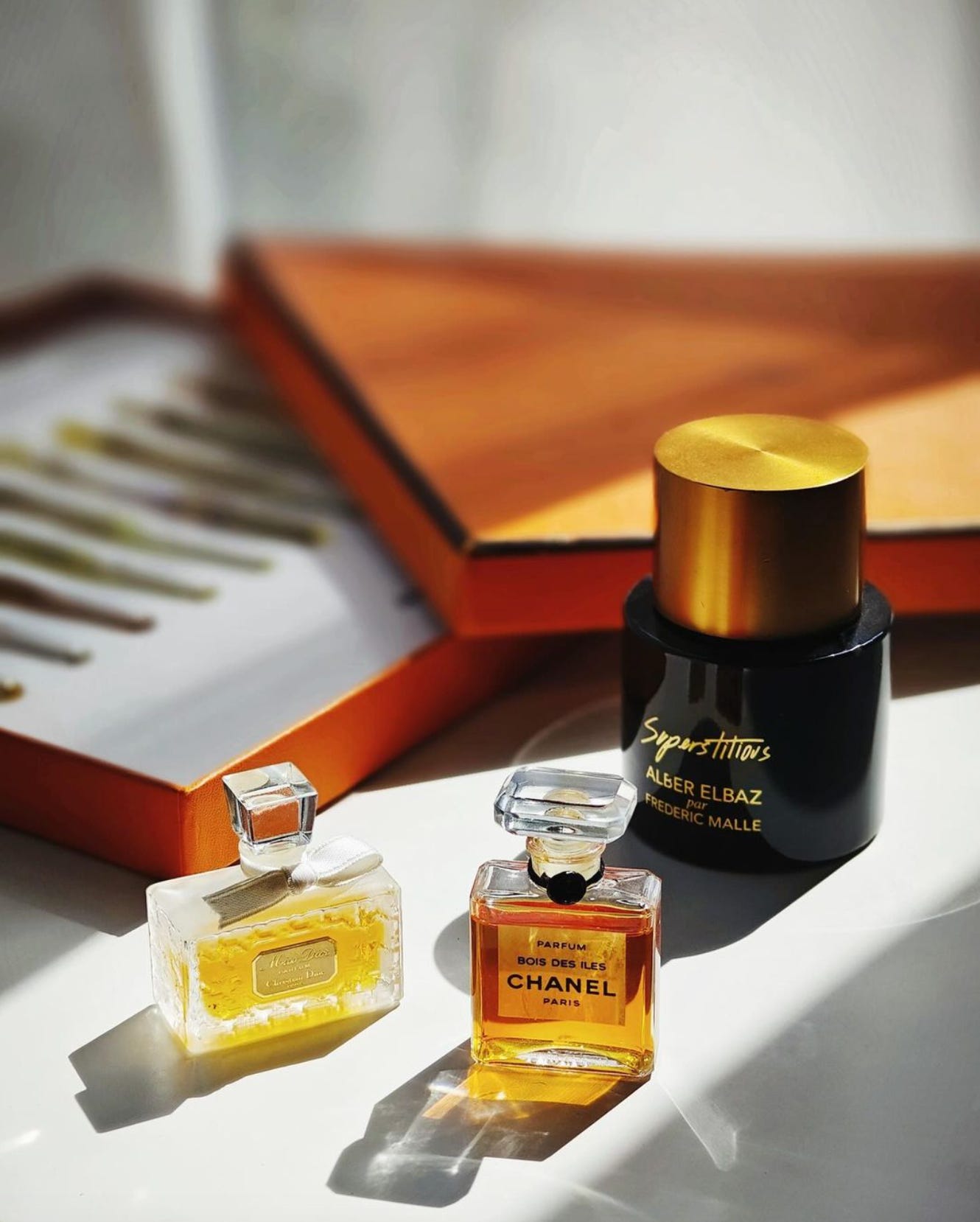
Another example is Miss Dior, launched with the Dior New Look collection in 1947. It embodies elegance combined with confidence and decisiveness. It’s feminine, yet framed by clean lines and silhouettes, with floral notes enveloped in leather and chypre.
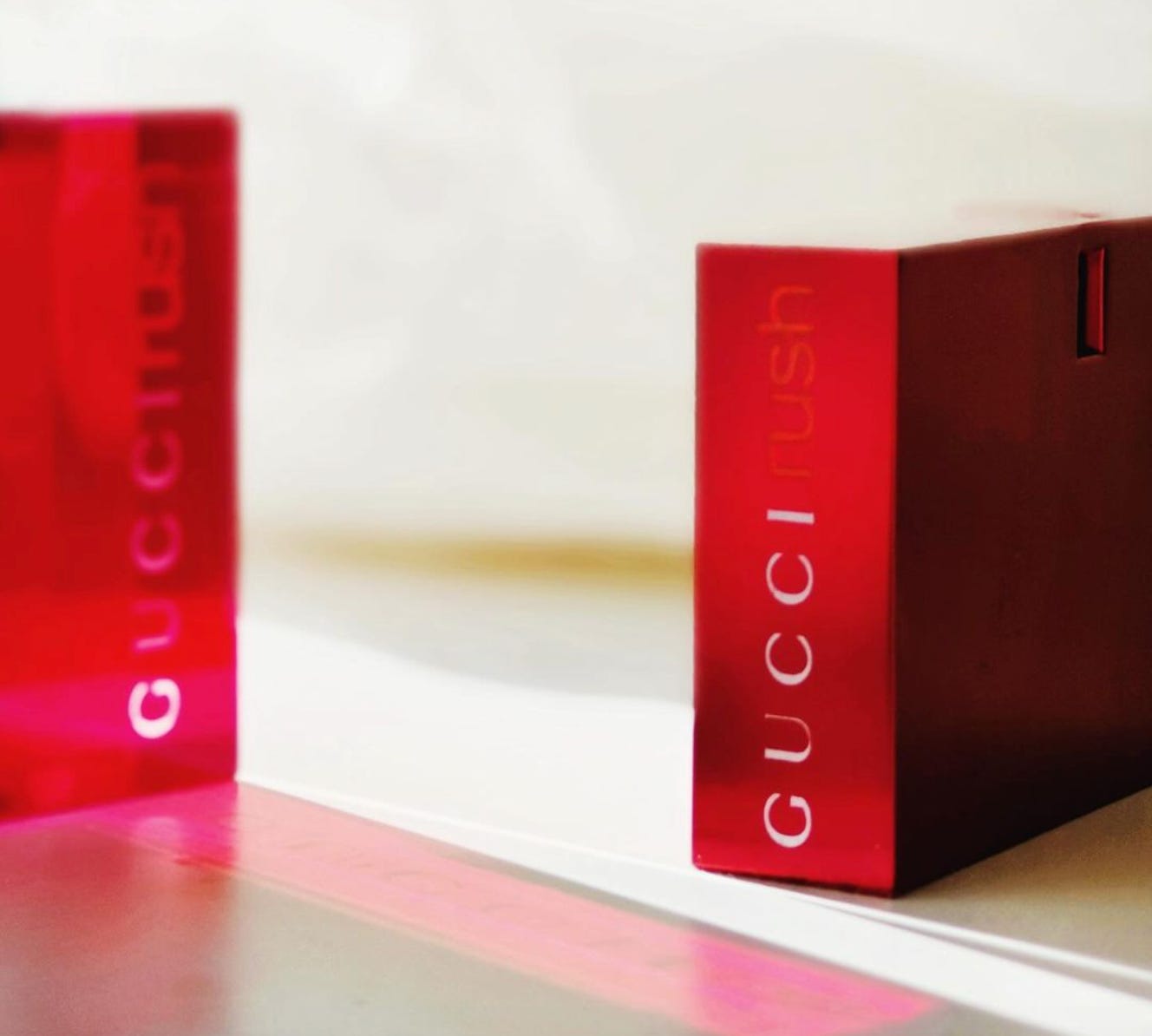
Then there's Gucci under Tom Ford — aggressive sensuality and sophistication, an endless party vibe. Legend has it that Ford approved Gucci Rush, the most popular fragrance of the time, in just a few seconds. It perfectly embodies the style of Gucci back then: as if it took the codes of the "old money" girls — Mitsouko’s chypriness, Diorama’s lactonic peachiness — and transported them to a 2000s nightclub with cigarette smoke and lacquered hair, making it roar and howl. Luca Turin captured this perfectly. Rush feels like a brash newcomer, surpassing many traditional successors, just like Ford himself.
Frederic Malle's designer collaborations are also noteworthy. My favorite is Superstitious, created "inspired by" Alber Elbaz’s work. When I first smelled it, I exclaimed to the consultant, “This is Rive Gauche YSL on steroids!” Later, I discovered that Elbaz was considered a likely successor to Yves Saint Laurent and had even worked there for about a year at the turn of the 90s and 00s before being replaced by Tom Ford. This style, bold, architectural, rounded, abstract, yet always incredibly refined, is quite evident. The recent collaboration with Acne is also very cool — sophisticated, yet extremely comfortable fragrance, much like Acne’s fashion.
Broader Codes of the House and Their Reflection in Perfumes
An interesting fact is that among perfume enthusiasts, Chanel and Hermès are the most beloved designer brands. And both of these two, in their exclusive and regular lines, pay significant attention to their connection with brand heritage and “codes”.
Hermès perfumes carry the same Protestant values as their main products — minimalism and precision in accords, no excess, a super-relaxed old-money feel. Jean-Claude Ellena, who was the artistic director of their fragrance line for many years, set this direction perfectly. He humorously noted that the Hermès person wakes up early, fresh, and energetic. Hence, the brand’s clothing is mainly daytime, simple, without excess or luxury. And if the Hermès person needs to attend an evening social event, they should simply dress or perfume themselves in Dior.
Building everything around the leather note would be silly and too on-the-nose. The brand’s codes go deeper, with artisanal craftsmanship, but almost Japanese in their approach: taking a simple item (a bag, for example) and crafting it to perfection and beyond. Ellena was notably inspired by Japanese artisans.

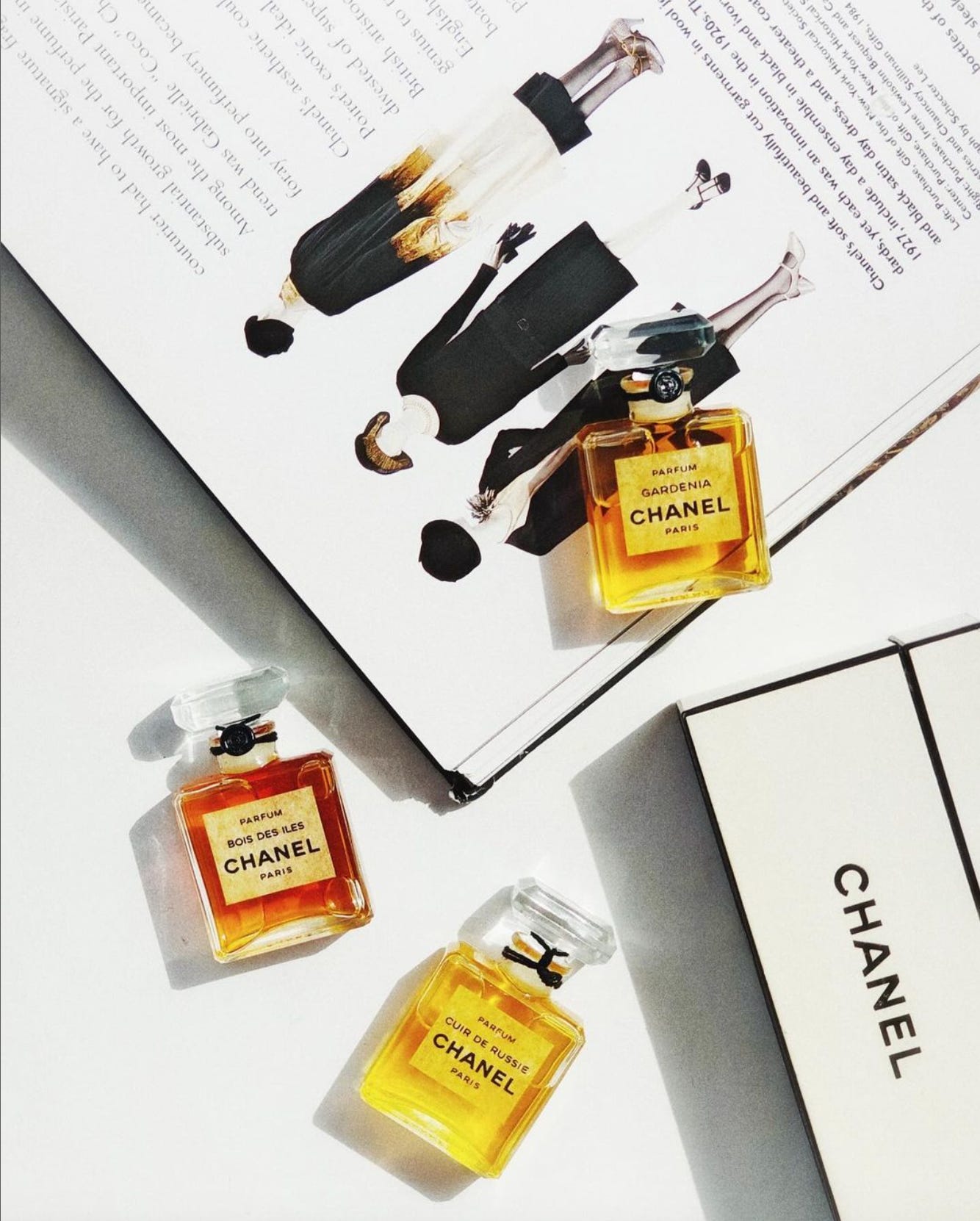
Chanel, on the other hand, represents luxury and excess, but always in a comfortable way. I have a strong opinion that Chanel’s exclusive line, along with No. 5 and No. 19, can fully satisfy a person’s fragrance needs. While not everyone will like everything, and not every fragrance will suit everyone, generally, you can blindly pick any bottle, wear it, and feel sophisticated and poised all day. It’s also charming how each new perfumer at Chanel creates their own “No. 5”. First was Ernest Beaux, then Henri Robert "reworked" it into EDT, Jacques Polge into EDP, and now Olivier Polge has made L'eau, which is remarkably "No. 5" and strikingly modern. By the way, appointing the heir of the previous head as the new art director of the house’s perfume line is also such an old-fashioned move. Like, even Guerlain has moved away from this idea.
Codes of Perfume Houses That Have No Relation to Couture
Here's something else that's interesting. When a perfume house is successful, these codes are always present.
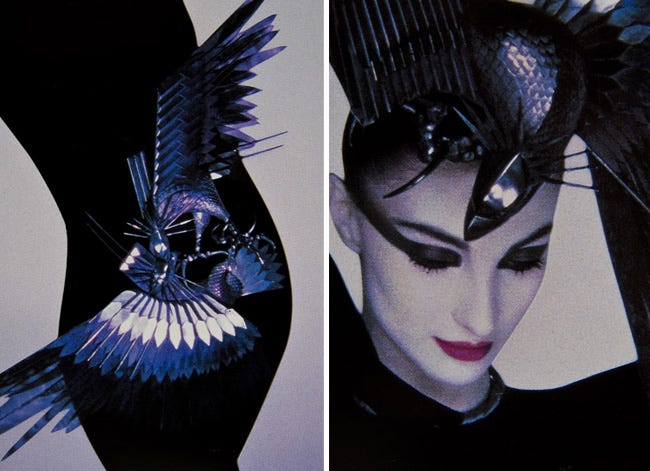
Serge Lutens — drama. Lutens' perfumes always tell a story. These stories are usually somber and complex, even when the fragrances themselves are compositionally simple, like milk and buckwheat. There is always a crack, a rupture, a counterpoint — drama. Lutens’ aesthetic is best appreciated by looking at his early photographic works for Shiseido: all those unfamiliar, infinitely beautiful, infinitely frightening, and elusive women, as if in a dream, leading the lyrical hero towards death. These works helped me visualize my sensations from perfumes created under his artistic direction.
Frederic Malle — concept, snobbery, intellectualism. He has always positioned his brand for those who are real enthusiasts of perfumery, who know perfumers’ names, are familiar with the history, can catch the references, and understand the materials. For those who are tired of “flashy, long-lasting, and sillage-heavy” scents and cheap marketing gimmicks. For connoisseurs who are not bothered by his Parisian snobbery but are attracted to it.
Tom Ford — sex is the common description. To me, it’s more about life, vitality, and hot blood. Ford himself is a straightforward Texan who created his own reality from scratch and became iconic in a very old-fashioned and traditional fashion world, where often only your parents matter. Perhaps that’s why I feel such boundless sympathy for him, as his journey resonates with me. He doesn’t try to do “what they do,” but instead brings life and hot blood to this cold, elitist world. If it’s not the norm? So be it; it’s simply beautiful. And people react to these simple things. Everyone says that sex no longer sells. Yet Ford names a fragrance Vanilla Sex, and it causes a frenzy even before its official release.
Guerlain is all about endlessly living emotions and repetition. So perhaps the word that best describes this house is "heartbeat." When it quickens, it signifies strong emotions, and the beats themselves repeat with a steady rhythm. The emotional connection is clear — Guerlain's perfumes arguably resonate most deeply with the sensual side. The idea of repetition also makes sense: a line of successors, the signature accord, the standard bottles, the self-references — all these elements contribute to that rhythmic continuity.
What other codes / DNA elements of perfume houses can you identify? Let's discuss in the comments!