

The Synthetic May
Featuring one balding Frenchman, thirty cardiac glycosides, and a small dragon's hoard on eBay

Once a year, in the first week of May, several million Western women conduct a small unconscious ritual. They walk into a garden, a park, a flower shop, and breathe in. Then they say, with the satisfied expression of a person identifying a familiar face in a crowd: it smells like spring.
What they mean is: it smells like Diorissimo.
They don’t know they mean this. That’s part of the trick.
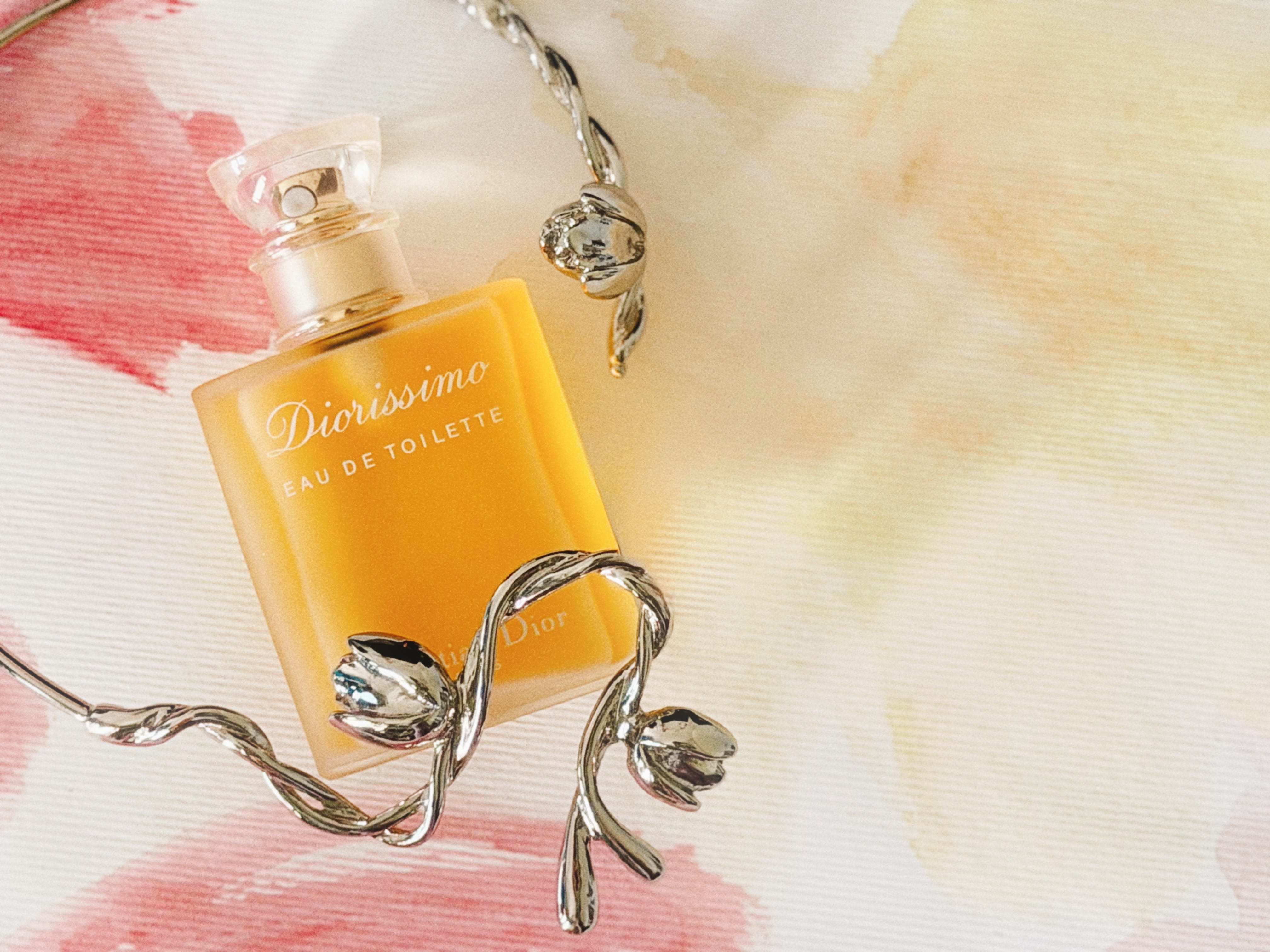
In 1956, a balding Frenchman named Edmond Roudnitska planted a patch of lily of the valley in his hillside garden in Cabris, above Grasse, and spent several months walking out to it every morning to smell the flowers. He was fifty-one, already famous in the small world of perfumery, and he was conducting research. The flower he was studying — Convallaria majalis, muguet, lily of the valley — had a problem. It refused to give up its scent. You could press its petals, distill them, soak them in alcohol, in fat, in volatile solvents; you could subject it to every extraction technology developed across four centuries of European perfumery, and it would yield nothing. Or rather, it would yield a faint, sad, vegetal liquid that smelled approximately like wet grass after a disappointing rain.
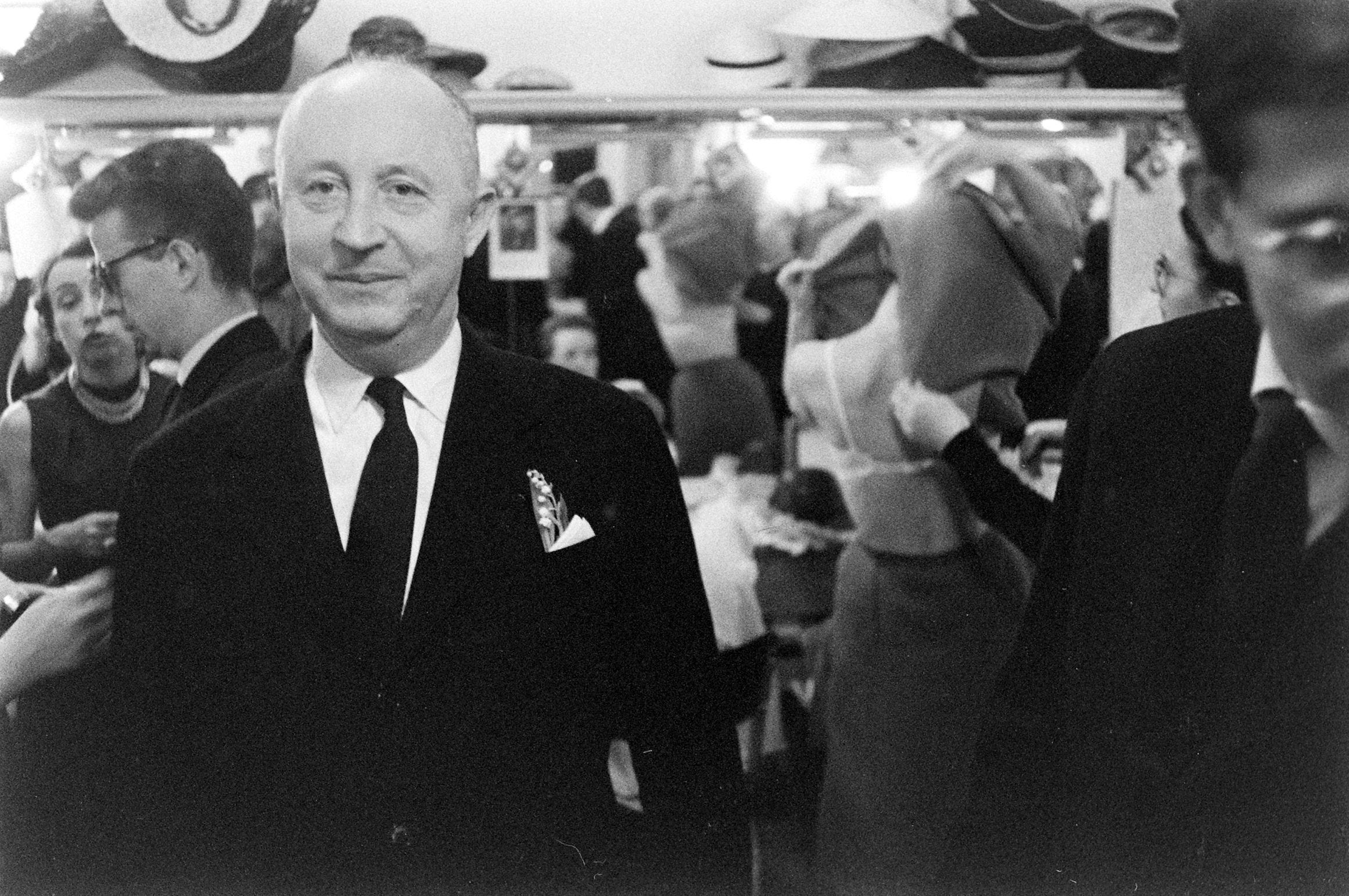
This was, comically, the problem of twentieth-century perfumery. The lily of the valley was perfumery’s white whale. Coty had tried. Houbigant had tried. Everyone had tried. Christian Dior — who had made the muguet his personal lucky flower, who put it in his lapel, in his collections, on his stationery — wanted a fragrance that smelled like lily of the valley, and there was no such thing as lily of the valley in a bottle, because the flower simply would not be captured.
So Roudnitska did what any reasonable Frenchman would do, which is to say, he gave up on capturing the flower and decided to invent it.
He went into his lab and built one out of synthetics. The main ingredient was a molecule called hydroxycitronellal, with a supporting cast of jasmine, ylang-ylang, lilac, a touch of civet for body, a base of sandalwood. He worked from memory of the garden, and from notes, and presumably from the feeling of a man who has spent too many mornings sniffing the same flower and is starting to dream about it.
What came out of the lab in 1956 was Diorissimo.
It did not smell like the lily of the valley in his garden. It smelled like the lily of the valley we wish his garden contained. Brighter, greener, more confident, more obviously a flower. The platonic muguet. The muguet you would have invented if God had outsourced the project.
Then came the part nobody expected.
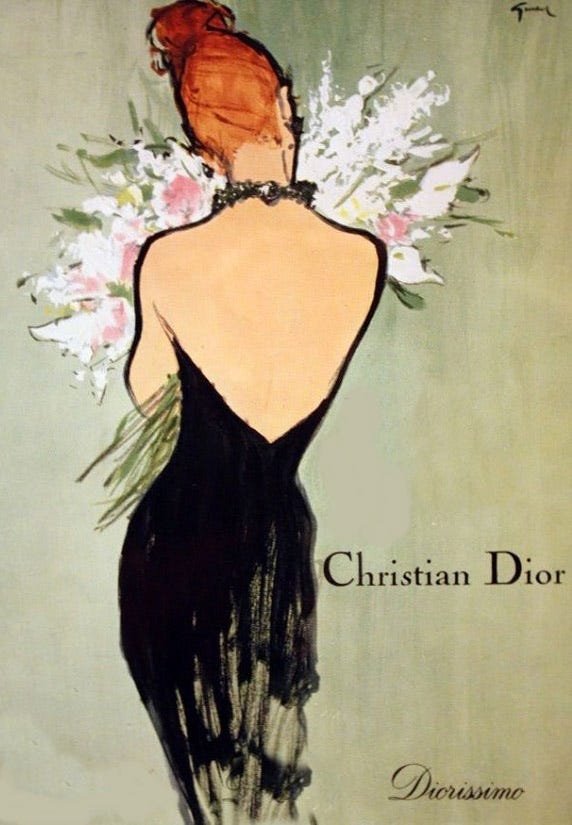
People started buying Diorissimo. Then they started spraying it on themselves. Then they started walking around — in Paris, in New York, in Tokyo, in Buenos Aires — leaving small clouds of synthetic muguet in elevators and on park benches and in the corridors of department stores. They wore it to weddings. They wore it to confirmations. They put it on their daughters. They put it on themselves on the first of May, when the French tradition is to give and receive a sprig of muguet for luck.
And here is where the trick happens. Slowly, almost imperceptibly, over the course of a generation, a new collective memory formed. A whole population of women came to know what lily of the valley smelled like — and what they knew, what they remembered, what they recognized when they encountered the actual flower in an actual garden, was Diorissimo.
The real flower started to seem like a slightly disappointing version of itself.
Go to a garden today. Find a real lily of the valley. Bend down. Breathe in. If you have any prior exposure to the perfume, you will have a strange, vertiginous experience — the experience of an original failing to live up to its copy. Hm, you’ll think. Not quite as bright as the perfume. You will adjust the flower in your mind. You will grant it a kind of provisional authenticity, while privately suspecting that the bottle on your dresser is doing it better.
The French theorist Jean Baudrillard wrote a great deal about this kind of thing, mostly while smoking and looking unimpressed. He called it the hyperreal: the moment when the simulation becomes more vivid than the thing it simulates, and eventually replaces it as the standard. Disneyland is hyperreal. Television news is hyperreal. The chicken nugget is hyperreal. And — as it turns out, though Baudrillard never got there — the smell of spring is hyperreal too. We have been wearing the simulation for seventy years. The flower is an underwhelming homage.
Roudnitska, who wrote books about the aesthetics of perfume — yes, books, plural, with chapters and footnotes and serious philosophical claims about the perfumer as artist — would have found this funny in a dignified way. He used to say a perfume should “speak to people of form, not of epidermis.” He meant it. The fact that he had successfully replaced an entire species in the collective imagination would have seemed to him not like a prank but like a vindication: the form had triumphed over the epidermis. The idea of muguet had outlived the muguet.
The flower, of course, had no comment.
Here is where the story gets even funnier, in a slightly darker way. While Diorissimo was busy becoming the smell of innocence — the perfume of confirmations, communions, brides, debutantes, every soft-lit moment of feminine purity from 1956 onward — the actual flower it imitated was, and remains, a violent little assassin.
Convallaria majalis contains around 30 cardiac glycosides. The principal one is called convallatoxin. Convallatoxin works by inhibiting the Na, K-ATPase in your heart muscle, which is a polite way of saying it slows your heartbeat down until your heart, embarrassed, stops doing it. It is in the same toxicological family as digitalis. Veterinarians consider it notorious because dogs and cats have died from drinking water out of vases that had lily of the valley in them. Symptoms in humans include salivation, nausea, vomiting, abdominal pain, pupil dilation, slow and irregular heartbeat, and — this is the part I love — hypercoagulability. The flower of innocence makes your blood clot.
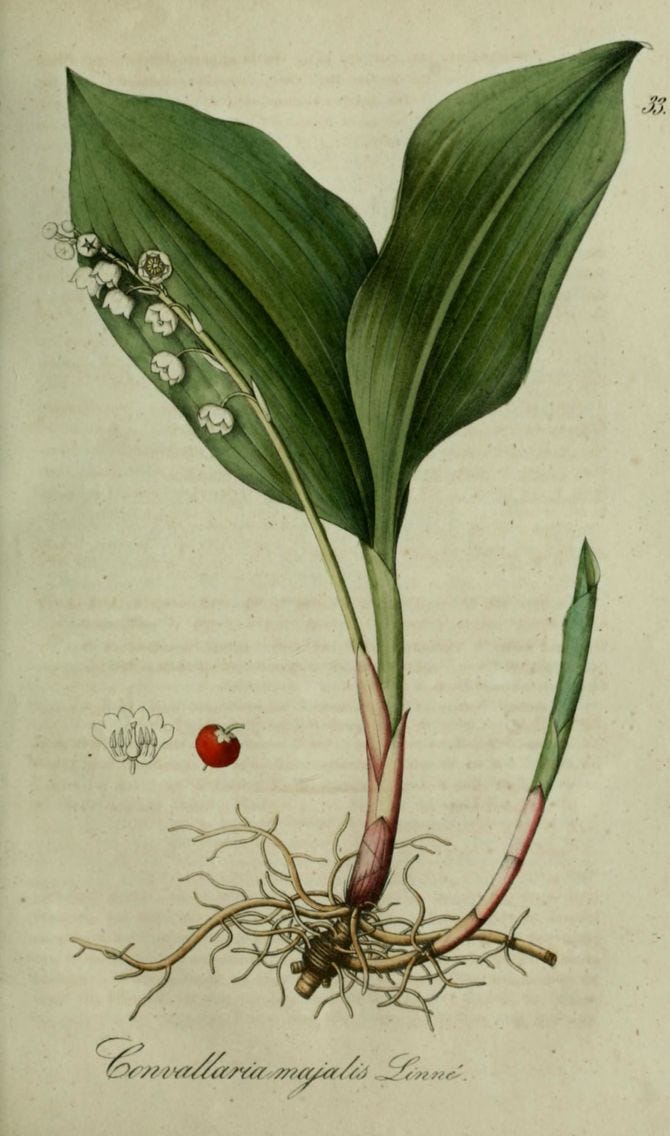
Every part of the plant is poisonous. The flowers, the leaves, the roots, the cheerful little red berries that appear later in the season and look like candy. There is a 2012 paper in Circulation titled, with admirable economy, “Digitalis intoxication induced by an acute accidental poisoning of lily of the valley.”
Now consider the iconography. In the Christian tradition, the lily of the valley is sometimes called “our lady’s tears” — the flowers are said to have grown where the Virgin Mary wept at the foot of the cross — or, more cheerfully, ladder to heaven. Brides carry it. Kate Middleton carried it. Grace Kelly carried it. Generations of small girls in white dresses have walked to first communion clutching tight, fragrant little posies of an extremely effective cardiotoxin. Whole continents of European femininity have been culturally trained to perceive a delicately murderous plant as the olfactory shorthand for innocence, freshness, virginity, beginnings.
And then a chemist in Cabris improved on it. He took this two-faced flower — gentle scent, lethal pharmacology — and abstracted away the lethal half. He kept the smell, dropped the cardiac glycosides, and produced a clean, safe, wearable simulation of innocence with none of the inconvenient lethality of the original. Diorissimo is, in this sense, the better lily of the valley. The Disneyland version. The PG-13 cut. The flower without the teeth.
This is something to think about while spraying it on a child.
There is one more turn, and it’s the saddest and most Baudrillardian, and I have a personal stake in it, so bear with me.
In the early 2000s, the European fragrance regulators got nervous about hydroxycitronellal. It is a known sensitizer — some small percentage of people develop contact allergy to it — and so the IFRA, the Brussels-adjacent body that decides which molecules you are still allowed to smell like, began progressively restricting how much of it can appear in a finished perfume. Diorissimo, whose entire structural integrity rested on hydroxycitronellal the way a cathedral rests on a keystone, had to be reformulated. Then reformulated again. Roudnitska’s son Michel has written publicly about this with the controlled grief of a man watching his father’s masterpiece being slowly edited by a committee of toxicologists. The phrase he keeps reaching for is “no real substitute.” This is the perfumery equivalent of a structural engineer informing you that the load-bearing wall has been replaced with a tasteful screen.
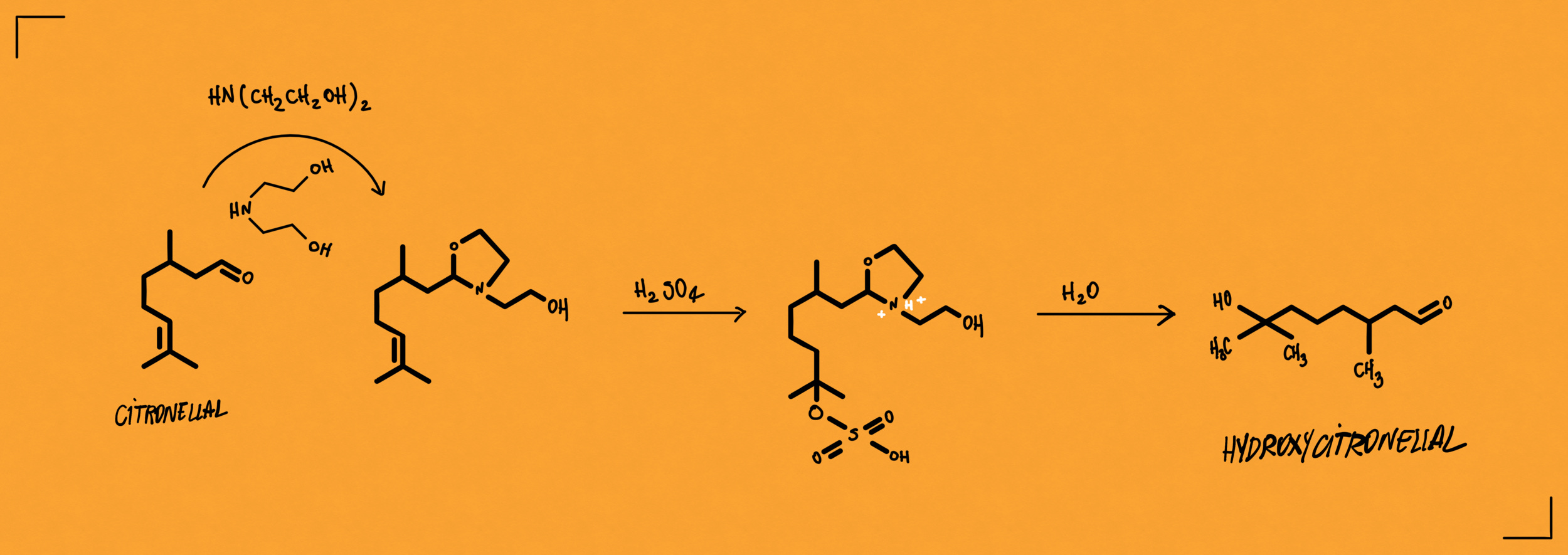
So now you can buy Diorissimo, but the Diorissimo you buy is a reformulation of a reformulation of the original. The flower is three layers of simulacrum away from anything you spray on your wrist, and it gets one layer further every few years, in the soft administrative way that all losses now happen.
When I first got serious about perfume, I read Luca Turin 🇮🇹🇪🇺 . Of course I read Luca Turin. Everybody reads Luca Turin. He is the man who taught a generation of obsessives that reformulation is desecration, that contemporary perfumery is a corpse paraded through the streets in increasingly cheap costumes, and that the only honest thing to do is hunt down vintage bottles on eBay and hoard them like a small dragon. I did this. I became, briefly, very righteous about it. I could deliver a short devastating monologue about IFRA at parties, and twice I actually did.
The problem, as anyone who has tried to live this way will tell you, is that vintages run out. Or they go off. Or the seller turns out to be a forger. The dragon’s hoard depletes. The outrage gets harder to sustain when the object of the outrage is, increasingly, a memory of a smell you can no longer access except through the very reformulations you despise.
My Diorissimo is from the nineties. It is, by the standards of the Turin orthodoxy, already a fallen woman — post-1985, pre-IFRA-apocalypse, a middle child of compromise. It is also, by the standards of what is currently sold on the Dior counter, a near-religious relic. I keep it in the dark. I wear it carefully. I have, more than once, calculated how many sprays I have left at my current rate of use, and the answer is always not enough, because the rate at which one wears Diorissimo turns out to be exactly the rate at which Diorissimo evaporates from the world.
So what do I do, in May, when the bottle runs out? Do I buy the current version, which is a polite ghost of a polite ghost? Do I accept that the lily of the valley I grew up with was already a lie and that the new lie is just a younger, more law-abiding lie? I have not decided. Some weeks I am a vintage hardliner, willing to die on the hill of 1978. Other weeks I think: Valentina, the flower itself doesn’t even smell like this. You are mourning a draft. Other women are wearing it and not having an existential crisis at the perfume counter.
Both of these positions are correct. This is the worst part. There is no clean exit from a hyperreal — once you are in it, you are picking between layers of artifice, and the question is only which artifice you find more moving.
When you wear Diorissimo in 2026, then, you are wearing:
— A 2010s reformulation — Of a 1956 synthesis — Of a flower that never smelled like that anyway — That you call “natural” — That you associate with “innocence” — That, in its natural form, would stop your heart — And that several thousand of us are quietly grieving in different vintages, like people who can’t agree on which year was the best for the marriage before the divorce.
This is not a tragedy. This is comedy at its most refined, the kind of comedy that requires seventy years, a European regulatory body, an eBay account, and a small personal collection of bottles you are afraid to wear too often.
So this May, when you walk through a park in Paris or Chișinău or Brooklyn and the air smells exactly the way May should smell, take a moment to appreciate what is happening. You are not smelling the flower. The flower is smelling like you. The cultural memory in your nose was installed in 1956 by a man in a lab coat who had grown tired of the original and decided to do better. The flower has been quietly imitating his work for several decades now, and doing, frankly, a mediocre job.

May does not belong to nature. May belongs to Christian Dior, who licensed it from a chemist in Cabris, who licensed it from a flower that wouldn’t cooperate. The lease was signed in 1956. We are all, every spring, paying rent without quite knowing it.
If this bothers you, I have good news and bad news. The bad news is that there is no escape — not even returning to the original flower, because the original flower no longer smells right, and also it might kill you. The good news is that this is true of more or less everything you find beautiful. Somewhere, in some lab, in some studio, in some boardroom, somebody made the version of it that you carry in your head. The flower is always second.
Happy May. Wear sunscreen. Don’t eat the muguet.
Any lily of the valley perfumes you do suggest today? I tried Cavatina from Dusita recently and thought it was pretty. Wonderful article! Love your work.
Really wonderful essay! But I have to say, I’m not one of those who mourns the loss of Diorissimo. I grew up loving the smell of real lily of the valley flowers but never cared for the perfume version of them. Instead the vintage perfume I’m collecting and hoarding is Bellodgia because I want to smell like a spicy carnation not like a sweet little white flower. I have some other discontinued carnation perfumes in my collection as well. Now they are talking about banning eugenol!