

Walnut Catkins in May
On Diorama, anticipation, and the courtyard of my childhood

Everyone says Diorama smells like an autumn forest. I’ve read dozens of reviews — Fragrantica, Basenotes, Perfume Shrine, vintage blogs, Turin — and they all converge on the same scene. Damp oakmoss. Mushrooms after rain. Fallen leaves. Wet bark. Late October, dusk, decay, that particular vintage melancholy of classic French chypres. Diorama, everyone agrees, is a late fragrance. A perfume of the season’s end.
And besides — it’s a chypre. Chypres in fragrance discourse have long been classified as the adult scent. Not teenage, not sweet, not floral, not morning. The chypre is the perfume of a woman who knows herself. They literally write that on perfume websites. The archetype: thirty-five plus, sophisticated, mature, ambitious, exquisitely groomed. Marlene Dietrich stubbing out a cigarette in a black-and-white frame. Lauren Bacall whistling. Greta Garbo, divine, exquise et chagrine, the way Mylène Farmer sang her in 1986 — baisers froids comme elle. Cold kisses, beautiful and orphaned and ruined. The 1930s, heavy lipstick, dense wool, suede, cashmere. The chypre feeds the mind, not the body. It’s for those who take life seriously. The chypre is jolie laide — it doesn’t try to please you, it isn’t cozy-sexy, it’s haughty-sexy. It’s for black tie, for evening, for cold months, for special occasions. And at its base sits, mandatorily, melancholy — depths and shadows, a whisper of mystery, the kind of riddle that’s only handed to those who have lived through something.
It’s a remarkably stable portrait, and it crystallized largely around Mitsouko in 1919 — postwar Europe, a woman who had lost, sadness as background, oakmoss as autumn. Mitsouko set the tone, and the whole chypre family lived inside that tone for the next century. Femme, Miss Dior, Cabochard, Aramis, Bandit — all read through the same frame. Oakmoss automatically means the past. Leather means memory. Animalics mean something that’s gone. A chypre is about what was.
I love chypres. Half my shelf is chypres. And I live with one inconvenient observation.
I don’t smell any of that in them.
And it’s most acute with Diorama.

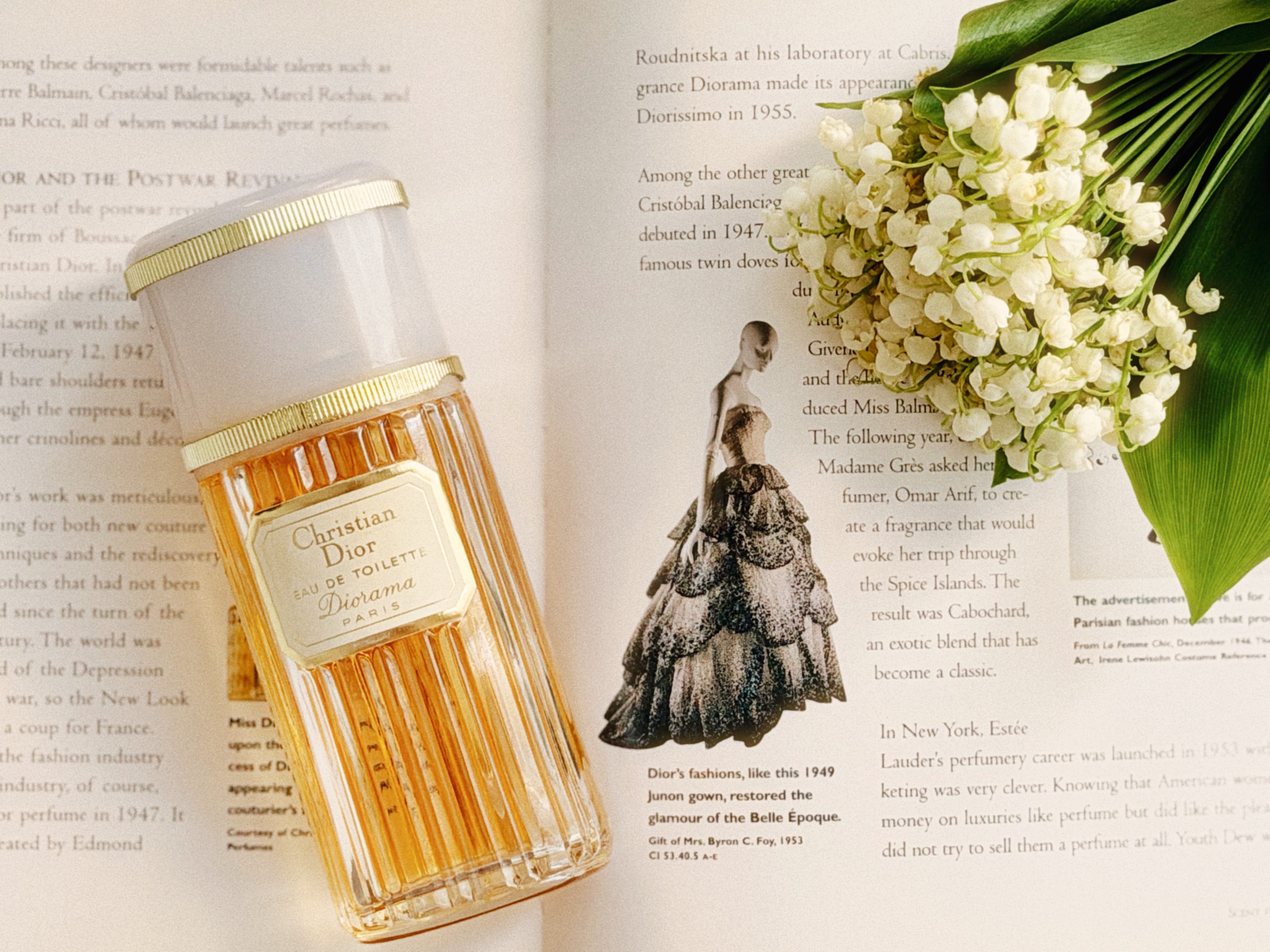
I’ve worn her for years. I have an old bottle, pre-reformulation, the one that still has the prunol and the caraway and the full animal underbelly that Demachy removed in 2010. And every time I put her on I don’t catch a single mushroom.
No autumn. No decay. Not a single trace of melancholy.
I smell mid-May.
Specifically: walnut catkins in puddles after a night of rain. Heavy, fleshy, caterpillar-like, beginning to rot. There are different kinds of catkins — birch, poplar, oak, each tree has its own window between April and June. But walnut ones are the most fleshy, and when they fall into a puddle and start fermenting, they release this sweetish-bitter, faintly animal smell that I have never encountered anywhere else. Except in Diorama.
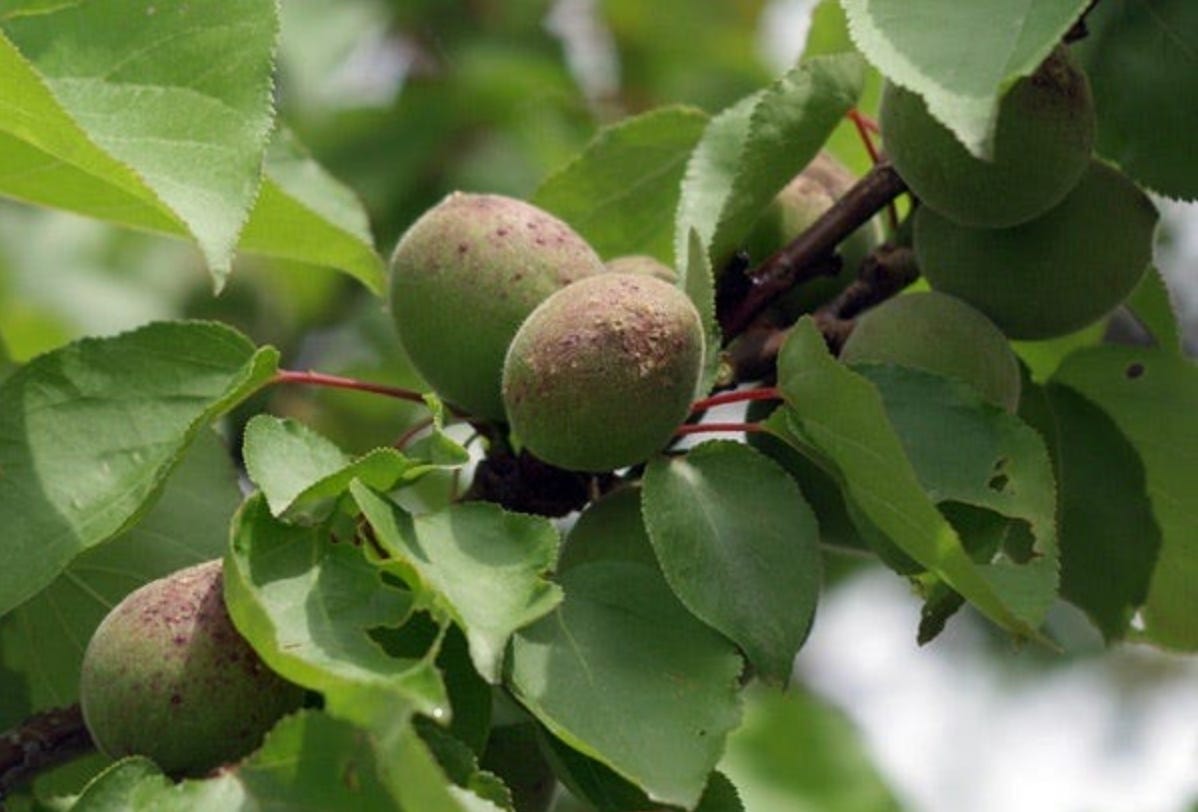
And around those catkins — the entire courtyard of my Chișinău childhood in mid-May. Jasmine in the neighbours’ front garden, heavy, white, brazen. Lilac in the bushes, gentle, slightly bitter. Cosmos flowers — a little bitter, a little spicy, the way only wild flowers smell, never cultivated ones. A tired apple tree with small sour apples that nobody picks because they’re not good for eating, but the tree fruits anyway every year. The roof iron on the shed, rusting that warm beautiful rusty smell that only old iron gives off in spring. Damp earth under the apple tree where the cat sleeps. And green apricots with soft pits, which you eat and eat and eat until your stomach hurts because they aren’t ripe yet, but who thinks about such things at eight. And warm leaves at the very top of that apricot tree, whose branches conveniently met in a fork that worked as a chair, from which you could see the whole courtyard, all the neighbours, all the old women on the bench, every secret.

Diorama smells like this. Like that specific window — mid-May, maybe the very beginning of June. That moment when the tree releases what has finished its work, so that fruit can begin. When the catkins have already bloomed and are rotting, and the apricots have only just set, still green, still with soft pits. This isn’t a perfume of decay. It’s a perfume of transition into fruit.
Which, incidentally, sits beautifully on the pyramid itself. The top of Diorama is plum, peach, melon, bergamot. Those are fruits. And the rotting catkins are exactly the organic matter that falls so fruit can appear. The fragrance stands at the seam: what just was makes way for what’s about to be. The plum-peach-melon up top isn’t nostalgia for summer — it’s the promise of summer. Diorama is a perfume of anticipation. Not “after.” A minute before.
And here begins the question I don’t have a final answer to, but which I think matters.
Where does the chypre-as-melancholy canon come from in the first place?
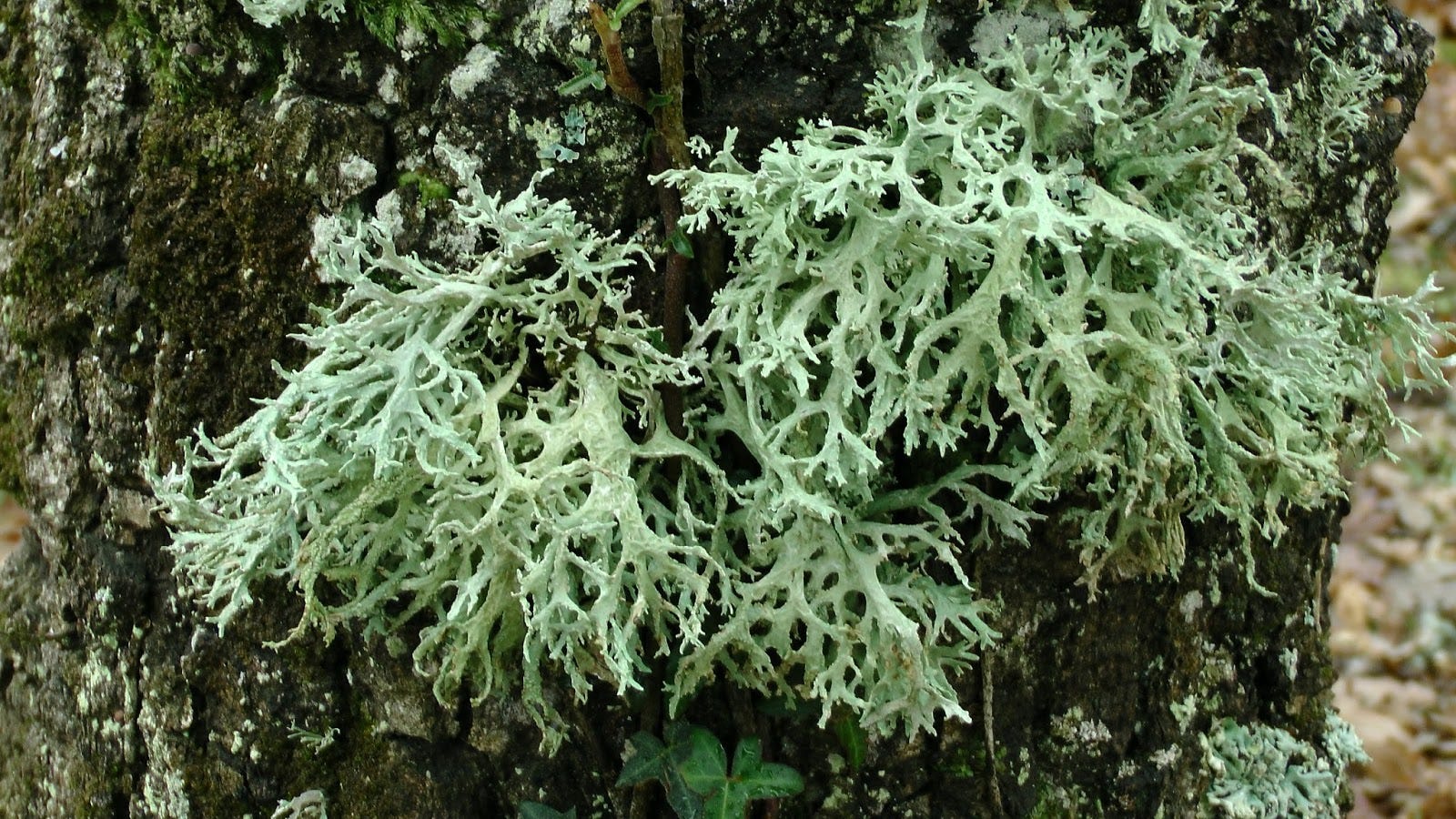
Oakmoss doesn’t smell like the past. Oakmoss smells like oakmoss — earthy, slightly bitter, damp, green, alive. And, by the way, it isn’t seasonal at all. It isn’t moss in the botanical sense; it’s a lichen. Evernia prunastri. Lichens don’t shed, don’t go dormant, don’t yellow in November. Oakmoss on the bark in August is exactly the same as in October, March, January. It grows three to eleven millimetres a year; what you see on a trunk has been accumulating for a decade. It has no autumn. It has no season at all.
And we made October out of it. We decided to read it as autumn — through Mitsouko, through Femme, through postwar noir, through Marlene Dietrich and Garbo and baisers froids, through that whole iconography. Twentieth-century French perfume criticism agreed on it, and we inherited the agreement. Now every time we smell a chypre, we automatically pull melancholy out of the wardrobe like a formal coat. That isn’t the nose. That’s a learned gesture, draped over a year-round lichen that never meant anything seasonal in the first place.
And Roudnitska made Diorama in 1949. The date matters. Not the twenties, not the prewar years. After the war. Two years after Christian Dior had shown the New Look — wide skirts, narrow waists, tons of fabric after five years of rationing, open shoulders, floral prints. A gesture of returning pleasure. A gesture of we deserved beauty. Diorama was a perfume inside that gesture. She was supposed to be about beginning. Not about a woman who knows what was. About a woman who doesn’t yet know what will be.
We re-read her later. Decades later, when vintage chypres became relics, and relics are easier to read as melancholy because melancholy fits more conveniently into the format of “vintage perfume on a vintage woman in a vintage chair.” Mushrooms and fallen leaves are our projection, not her property. We filed her under autumn because that was easier to catalogue.
But Roudnitska put May into her. Catkins in puddles. Fruit just setting.
I’m not certain the nose is always right. Sometimes it errs, sometimes context bends perception, sometimes you simply project your own life onto a bottle. I know that my Chișinău courtyard is my Chișinău courtyard, and not every wearer of Diorama has, in their head, a tumbledown shed with rusting iron, puddles under a walnut tree, and an apricot tree with a chair-shaped fork on top.
But I also think that when your nose disagrees with the consensus this confidently, it’s worth pausing to ask whether the consensus might be the one in the wrong. Especially when that consensus built up slowly, through layers of interpretation, and each subsequent critic was reading the previous one rather than smelling the tree.
Diorama in 2026, on my wrist, in May, in Chișinău, right now, while outside there are puddles full of caterpillar walnut catkins — smells like this. Not October. Not decay. Not Garbo. That short window between the catkin and the fruit, when everything is still ahead, and you’re eight, sitting in the fork of an apricot tree, and nothing has happened yet, and everything is still possible.
And I think I’m starting to understand why I wear her so often recently. Not because she’s beautiful (though she is). Because she’s the only perfume I own that goes on like a promise that the day will be good. Most perfumes work as ornament, mood, mask, identity. Diorama works as a forecast. She says: today there will be a courtyard. There will be a tree. There will be something ahead.
Tomorrow I’ll wear her again.
The chypre as a genre of anticipation… you’ve flipped the script, and now I can’t unsmell it!
Allow me to rehash something that I scribbled a while ago:
It’s pretty remarkable that the words we use to describe scents can cut both ways: on the one hand, they can sharpen our attention and refine our capacity for discernment, helping us to more precisely identify and describe what we are smelling; on the other hand, they can also manipulate and even deceive us into sensing what might not necessarily be there, by the sheer power of suggestion.
I think that this ambivalent cognitive relationship with language is part of what makes olfaction, as a sense, so unique, confounding, and mysterious. And I think that it’s part of the reason why we find perfumery so aesthetically gratifying.
I wore Diorama and as I walked through the common in my town center, and it all made perfect sense. There were even an oak tree with catkins, and I thought of you. Chypres for spring, it shall be.